Industrial Property Investment Singapore: Using B1 Zoning to Support Your Business Model
A lot of people treat industrial property as a pure investment product, then spend months trying to reverse-engineer whether the asset can support their actual business plan. The more efficient route is the opposite: start with your operations, then let the zoning and the unit specifications do their job.
In Singapore, B1 zoning is one of those “make or break” categories for business owners who want industrial space without the heavier constraints that come with heavier industry. B1 is intended mainly for clean industry, light industry, warehouses, public utilities and telecom uses. It is also a zoning framework Click here where regulators expect a meaningful industrial use quantum, not a vague intention to “use it for work later”.
When you get B1 right, it can line up your daily reality with the legal reality of the premises, and that alignment is what protects both cashflow and your exit options.
Why B1 zoning tends to fit cleaner, operationally flexible businesses
B1 zoning is designed for uses that generally do not create the same nuisance profile as heavier industrial categories. In practical terms, URA’s guidance indicates that uses that need a nuisance buffer of more than 50m are generally not allowed. For businesses, that matters because it forces a boundary around what you can run there without triggering additional approvals or feasibility issues.
At the same time, B1 is not only about “factory” in the narrow sense. URA’s description of B1 includes clean and light industry, plus uses like warehouses and utilities/telecom-related uses. That broader envelope is why you will see B1 industrial spaces being considered for light manufacturing, food packing and processing-related activities, e-business and other clean operational models.
If you are evaluating industrial property on a B1 basis, the zoning concept you want in your head is not “this is safe for any tenant”. It is “this is intended for a specific type of operational profile, and the details will be enforced through use and approvals”.
The use quantum that often surprises buyers
One requirement that directly affects what you can and cannot plan to do is the use quantum. URA states that at least 60% of the floor area or GFA in a B1 development or strata unit must be used for industrial purposes. The remaining area is limited to ancillary or supporting uses and approved secondary uses.
That 60% threshold is where many business owners get stuck. It is not the headline zoning label alone, it is the expectation that the premises remains predominantly industrial. If your plan is hybrid, for example operations plus lots of showroom-like use, staff amenities, or frequent client-facing space, you must treat the use quantum as a design constraint. It will affect how you layout space and how you describe your intended trade during due diligence.
B1 vs B2: the trade-off you are really paying for
Many discussions around B1 vs B2 become generic. Here is the more practical way to frame it: B2 is the heavier-industrial category, while B1 is the cleaner, light-industrial category.
URA’s guidance gives you the nuisance-buffer direction for B1, and JTC’s unit presentation for B2 listings commonly reflects different technical characteristics compared with B1 flatted factories, including higher floor loading and different height specs. Those parameters are not decorative. They are the kinds of physical allowances that heavy industry uses rely on.
So the real question for an investor is not “which is better”. It is whether your intended usage needs B2-level capability. If your business model does not genuinely need heavier industrial capacity, you may end up paying for characteristics you will never exploit, then still face approval constraints based on the approved use and the industrial quantum expectations.
Conversely, if your business is trending toward processes that require heavier industrial handling, treating a B1 listing as “we will manage somehow” can backfire. You would rather discover those realities early than after renovation and tenant lock-in.
Freehold vs leasehold industrial Singapore: scarcity is part of the decision
Industrial land and industrial space in Singapore includes a lot of leasehold supply, and JTC’s estate and unit pages commonly show lease terms such as 60-year, 30-year, or 20-year lease terms depending on the estate and product. Freehold industrial space is relatively scarce in Singapore, which means “freehold industrial property Singapore” often becomes a premium and a different kind of bet.
When you compare freehold vs leasehold industrial Singapore, the investment issue is not just your purchase price. It is how you structure your time horizon and how confidently you can model a resale.
With leasehold industrial assets, buyers typically need to be comfortable with remaining tenure, and industrial buyers can be more sensitive to the approved use and the building and unit specifications. A unit that is “good on paper” but mismatched to actual operations can have limited demand, especially if its features do not align with what tenants in that niche genuinely need.
That is why a clean zoning and a clean use fit can matter as much as tenure in your underwriting.
City-fringe B1 industrial property and the operational logic behind it
If you run light manufacturing, packing, e-commerce operations, or other Space Nova Singapore clean and relatively efficient workflows, location is not only about prestige. It is about whether your logistics flow stays predictable.
City-fringe industrial precincts such as Tai Seng, Paya Lebar, Ubi, Kallang and MacPherson are often favoured for e-commerce, light manufacturing, R&D and urban logistics because they are closer to workforce catchments and transport links. URA’s B1 planning maps also show B1 industrial clusters around city-fringe MRT areas.
This is where keywords like Tai Seng industrial property and Paya Lebar industrial property stop being marketing terms and start becoming operational realities. If your workforce and last-mile deliveries are central to your model, you usually feel the difference in daily schedules and costs more directly than a purely long-distance industrial plan.
Still, do not treat “city-fringe” as a guarantee. The B1 use quantum and the approved use remain the gatekeepers. Location affects demand, but zoning and unit suitability determine whether that demand can legally and practically materialize.
Strata industrial units Singapore: what ownership changes, what it does not
Buying industrial space as a strata unit is common for investors and operators who want asset control without buying an entire industrial site. The benefit is straightforward: you can buy a specific unit with a defined footprint, often in a building that includes multiple units with similar industrial characteristics.
What changes with strata is not the fundamental B1 logic. The use quantum still applies in a B1 development or strata unit, with URA’s stated requirement of at least 60% industrial use in floor area/GFA. You still need to treat loading access, ceiling heights, and approved use as non-negotiables.
In other words, strata ownership can give you flexibility in how you size your investment, but it does not give you freedom to ignore zoning intent. If your trade does not match the approved use, you could face constraints even if the unit is physically capable.
Ramp-up industrial units Singapore vs flatted factories: logistics is a spec, not a preference
One of the most under-discussed topics when buying industrial property Singapore is access. Many buyers focus on price per square foot, then realize too late that moving goods is harder than expected.
JTC’s description of ramp-up factories highlights direct vehicular access for loading and unloading. Flatted factories are generally accessed via common corridors, lifts and loading bays. That difference affects truck access, turnaround time, and day-to-day logistics.
If you are an e-commerce operator or a light manufacturer where you are constantly receiving and dispatching, the unit layout can materially influence efficiency. If your workflow needs frequent deliveries with heavier pallets and larger vehicles, ramp-up can reduce operational friction.
But if your business uses smaller vehicles or mostly relies on a limited number of delivery windows, you may not need ramp-up as much. The key is to match the access spec to your handling reality, not to the story you tell during viewing.
Light industrial space for sale Singapore: how to evaluate it beyond the photos
When you search “light industrial space for sale Singapore” you will likely see a wide range of sizes, configurations, and presentation quality. Photos can be flattering, and brochure measurements can look neat. The due diligence work has to move to the parts of the asset that determine whether it can support your business model and whether it can attract tenants.
JTC’s guidance on key technical checks for strata industrial units includes items like floor loading, ceiling height, goods-lift access, loading-bay provision and whether the trade matches the approved use. Those checks are where your risk lives. A unit can look “fine” while still being wrong for your intended operations.
For example, even if a unit is in B1 and the building is described as suitable, if your planned workflow stresses floor loading differently or requires goods movement that the unit’s lift and loading setup cannot efficiently support, your productivity can suffer. That affects rent-paying ability for investors and affects survival for operators.
Buying industrial property Singapore: build your underwriting around real constraints
Let’s make this concrete. In an industrial investment, your returns depend on operational viability, tenant demand for the specific unit type, and the durability of the approved use.
B1 provides a structured expectation for industrial purposes, but your asset still sits inside legal controls. URA’s use quantum requirement means that if a future tenant (or your own business, after a pivot) cannot sustain that “industrial-majority” pattern, you can run into friction.
This is also where landlords and investors should think like operators. A unit that is too specialized can have fewer tenants, while a unit that is too generic might still fail if it lacks a key technical spec. Your goal is a unit that is technically compatible with clean industry and light operational workflows, and that remains aligned with B1’s approved-use intent.
That approach is consistent whether you are looking at “buy industrial property Singapore” options for owner-occupation, investment, or both.
Industrial property investment Singapore and financing realities
Industrial property loan Singapore is often discussed with less specificity than residential mortgages, partly because the assessment can be lender-dependent. In practice, financing for property investment generally depends on lender assessment, and non-residential loans are typically under commercial terms rather than residential housing loan rules.
You should therefore expect that the lender will look at more than just the purchase price. They will assess your underwriting logic, your business relationship or tenant profile (if any), and the property’s income potential and collateral characteristics, subject to their internal policies.
If you are buying through an entity, the structure can also be a practical factor. “Buyinging industrial property under company name” is common for industrial assets used for business or held for investment. However, stamp duty outcomes depend on the specific transaction rules, and buyer profile can matter for certain stamp duty regimes, even if industrial property is not subject to the same ABSD framework as residential.
Industrial property stamp duty Singapore: what to keep straight
It is easy to get the stamp duty story mixed up because residential ABSD is widely discussed, while industrial stamp duty has different mechanics.
From the tax rules perspective provided by IRAS, industrial property transactions are not subject to Additional Buyer’s Stamp Duty in the way residential acquisitions are. ABSD applies to residential property acquisitions. For industrial transactions, the buyer generally follows normal BSD rules, and seller’s stamp duty may apply on disposal where applicable.
On disposal, IRAS applies Seller’s Stamp Duty to industrial property based on holding period: 15% if sold within 1 year, 10% within 1–2 years, 5% within 2–3 years, and none after 3 years.
That holding-period sensitivity changes how you think about timing. It affects your planned exit strategy, your renovation schedule, and your willingness to refinance quickly after acquisition. If you are planning a short holding period, you need to bake those SSD steps into your projected returns, not treat them as an afterthought.
GST on new non-residential purchases: do not ignore cashflow timing
If you are buying a new non-residential property from a GST-registered seller or developer, GST is payable on the purchase. IRAS guidance states that buyers of non-residential properties must pay GST if the seller is GST-registered.
This cashflow timing matters for industrial property investment Singapore because your internal rate of return can be impacted by upfront GST outlay, especially when combined with loan drawdown schedules and renovation spending. If you are comparing two options that look similar in price, but one is tied to a GST-registered developer sale, your comparison needs to reflect the actual upfront cash.
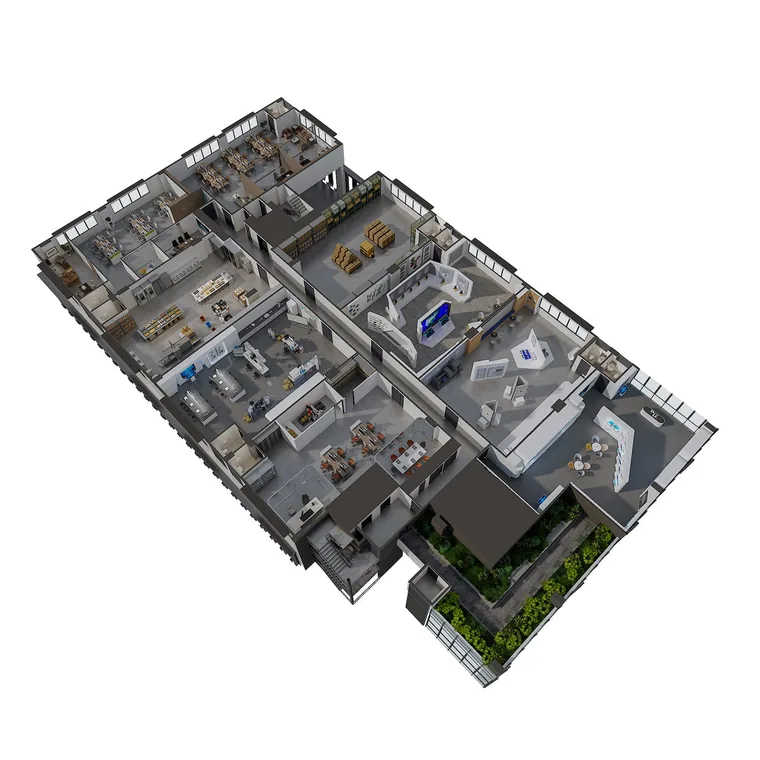
New launch industrial property and ramp-up expectations
New launch industrial property can be attractive for investors who want fresh building specs and clearer compliance documentation. With industrial, however, you still need to confirm that your intended use aligns with B1’s industrial quantum requirements and approved-use constraints.
If your operational model depends on movement efficiency, you should also consider whether the development’s unit access supports your process. JTC’s descriptions of ramp-up factories and flatted factories reflect the logistics differences, and those concepts can influence what you can realistically do on day one.
“Ramp-up industrial units Singapore” searches often reflect a specific operational desire, but zoning and approved-use realities still apply. A ramp-up layout does not replace the need to match the approved trade and maintain the required industrial use proportion.
How to buy and verify B1 suitability without getting lost in jargon
At this point, the question becomes: how do you evaluate a B1 industrial property beyond reading zoning labels and looking at floor plans?
In my experience, the most reliable approach is to treat the B1 label as the starting point, then verify three layers in sequence: the approved use alignment, the industrial use quantum implications, and the technical specs that support your daily workflow.
Here is a practical due diligence checklist you can run during viewing and before you commit.
- Confirm the unit or development is under B1 zoning and understand the industrial use quantum expectation, including the need for at least 60% of floor area/GFA to be used for industrial purposes.
- Check whether your planned trade fits the intended B1 industrial profile, and be mindful that some uses that require a nuisance buffer of more than 50m are generally not allowed.
- Verify the technical specs tied to operations, including floor loading, ceiling height, goods-lift access, and loading-bay provision.
- If the unit is a strata industrial unit, ensure the approved use and the unit’s operational access support that approved trade, not just what the building appears to accommodate.
- Think through access for dispatch and receiving, especially if you are deciding between ramp-up industrial units and flatted factory configurations.
That checklist is not about paperwork for its own sake. It is about reducing the risk that the unit works on your first week, then becomes a compliance problem later, or a logistics problem immediately.
Renting and rental yield: where B1 can help and where caution remains
Industrial property rental yield is often discussed as though it is a simple number you can lift from a market report. The more realistic view is that yield depends on who will rent the unit you actually own, under the approved-use and technical constraints you actually have.
Because B1 is intended for clean and light uses, you can sometimes find a tenant pool that matches e-business, light manufacturing, packing and processing-related activities, printing and publishing-related operations, media, and similar clean profiles. That broad compatibility can be helpful for maintaining occupancy.
But liquidity still tends to be trade-specific. The official use quantum rules and technical requirements shape who can qualify and who can operate profitably. A unit can deliver a respectable rental picture if the asset is easy to understand and easy to operate for the right tenant. If it is too specialized, vacancy can cost more than expected.
So rather than treating “industrial property rental yield Singapore” as a fixed target, you want to anchor it to the unit type you buy, the B1 constraints you accept, and how reliably you can attract tenants whose business model fits the approved use and industrial-majority expectation.
A simple way to think about demand in city-fringe B1 areas
Consider the city-fringe precinct logic again. Tai Seng industrial property and Paya Lebar industrial property are popular because they sit close to workforce catchments and transport links. That supports demand for urban logistics and clean operational uses.
However, the demand story only works if your unit’s access and specs align and the approved trade is compatible with B1. Otherwise, the location advantage will not solve zoning mismatch or operational bottlenecks.
This is why I tend to view city-fringe B1 as a “demand tailwind”, not a “risk eliminator”. It helps. It does not replace verification.
Buying under a company name: practical benefits, stamp duty awareness
Buyinging industrial property under company name is common because industrial assets can be tied to business operations or held for investment. The practical benefit is that you can consolidate business and asset holding under one entity, which can be administratively convenient.
Still, stamp duty and disposal planning need attention. While ABSD is not part of industrial acquisitions in the way it is for residential, SSD rules for industrial property still apply based on holding period. Your company structure does not remove the need to consider what happens if you sell within 1 year, 1 to 2 years, or 2 to 3 years.
For investors, planning exit timing is part of sound industrial property investment Singapore strategy. For owner-operators, it also affects renovation decisions, since you might not want to sink money into improvements that will be hard to recoup if you later need to liquidate quickly.
JTC leasehold industrial and the reality of planning around tenure
Because much industrial supply is on leasehold land, it is common to encounter JTC leasehold industrial products with varying remaining terms. JTC estate and unit pages commonly show lease terms like 60-year, 30-year or 20-year, depending on the product.
Tenure affects investment horizon and exit expectations. It can also influence your willingness to invest in fit-out and operational upgrades. If a tenant plan requires a long ramp-up period or significant reconfiguration, you need to see whether your hold period can realistically support the investment.
This is where “ramp-up industrial units Singapore” becomes relevant again, but in a different sense. Ramp-up factories improve logistics during daily operation, yet your overall investment still needs time to stabilize occupancy and usage patterns. With leasehold assets, you want to ensure the stabilization timeline lines up with your leasehold horizon.
Putting it all together: using B1 to support your business model, not just your spreadsheet
B1 zoning is more than a label. It is an operational promise with boundaries.
URA’s B1 framework expects clean and light industry, warehouses, utilities and telecom uses, with constraints around uses requiring more than a 50m nuisance buffer. It also expects a minimum industrial use quantum of at least 60% of floor area/GFA in a B1 development or strata unit, with the rest limited to ancillary and approved secondary uses.
If your business model is naturally aligned with those expectations, you can use B1 to reduce compliance ambiguity, attract compatible tenants, and buy industrial property Singapore with a clearer path for both operations and exit.
If your model is not aligned, no amount of location advantage or marketing polish will fully fix the gap. That is why the smartest buyers do the same work in a different order: they start with the trade, then check use quantum and approved-use fit, then validate technical specs like floor loading, ceiling height, lift access and loading-bay provision, and finally consider whether the layout supports how goods actually move.
Do that, and B1 becomes a business tool, not a gamble.