Buying Industrial Property Singapore: Ensuring Your Intended Trade Matches Approved Use
Industrial property in Singapore is often marketed with numbers that sound straightforward: location, tenant demand, lease tenure, and projected rental. Then you start aligning your business plan to what the site is actually approved to do, and the conversation gets real. The most expensive mistakes I have seen are rarely about paying too much upfront. They are about buying the “right” unit for the wrong trade, or assuming approvals can be adjusted easily after you have already signed.
If you are buying industrial property Singapore for your own operations, or industrial property investment Singapore to lease out, the approved use should be your first filter. This is especially true with zoning like B1, where the trade fit is not just a suggestion, it is built into how the development is controlled.
The approvals are not paperwork, they are constraints
For B1 industrial property Singapore, the use intent is mainly for clean industry and light industrial activities, with allowances that are tighter when a use creates nuisance or needs a bigger buffer. URA’s guidance on B1 indicates that uses that need a nuisance buffer of more than 50 m are generally not allowed, while some general industrial uses can be considered case by case if the buffer requirements are met. That single line can change everything if you are planning something that involves odour, noise, or process activity that may not stay “clean” in practice.
URA also describes a use quantum requirement for B1 developments and strata units. At least 60% of the floor area or GFA in a B1 development or strata unit must be used for industrial purposes. The remaining area is limited to ancillary and supporting uses, plus approved secondary uses. In plain terms, you cannot treat the industrial component as optional. Your operations must occupy the industrial footprint in a way that matches how the B1 unit is controlled.
This is why a unit can look suitable on paper and still become a problem when you run the day-to-day. Fit-out decisions, the way you store goods, where you place packaging lines, even how you organise space for office work, can all determine whether you are staying within the industrial use quantum and the allowed categories.
B1 vs B2: the trade difference you feel in real life
Many buyers ask whether B1 vs B2 industrial zoning is a binary choice: clean trade versus heavy trade. In practice, it is more specific. URA’s B1 allowance framework centres on clean and light uses, with restrictions related to nuisance buffers and the GFA split for industrial purposes. Meanwhile, B2 is the heavier-industrial category.
Even without getting lost in labels, you can often feel the difference through the technical character of typical units. Context from JTC listings suggests that B2 units commonly show different specifications than B1 flatted factories. For example, B2 listings frequently reflect higher floor loading and different height specs. That matters for businesses that depend on heavier equipment, taller storage, or layouts that require structural capability.
So when you are buying industrial property Singapore, “will it work for my trade?” is not only about whether you can obtain a tenant. It is also about whether the unit’s design and the zoning’s control logic match how your processes behave.
A practical way to think about it: if your operations are clearly “light” and keep nuisance concerns contained, B1 is often the better fit. If your processes are inherently heavier, B2 can align better with the unit’s structural intent. Where people get into trouble is trying to force a use that belongs in the B2 world into a B1 envelope.
Strata industrial units: the industrial quantum becomes your operating plan
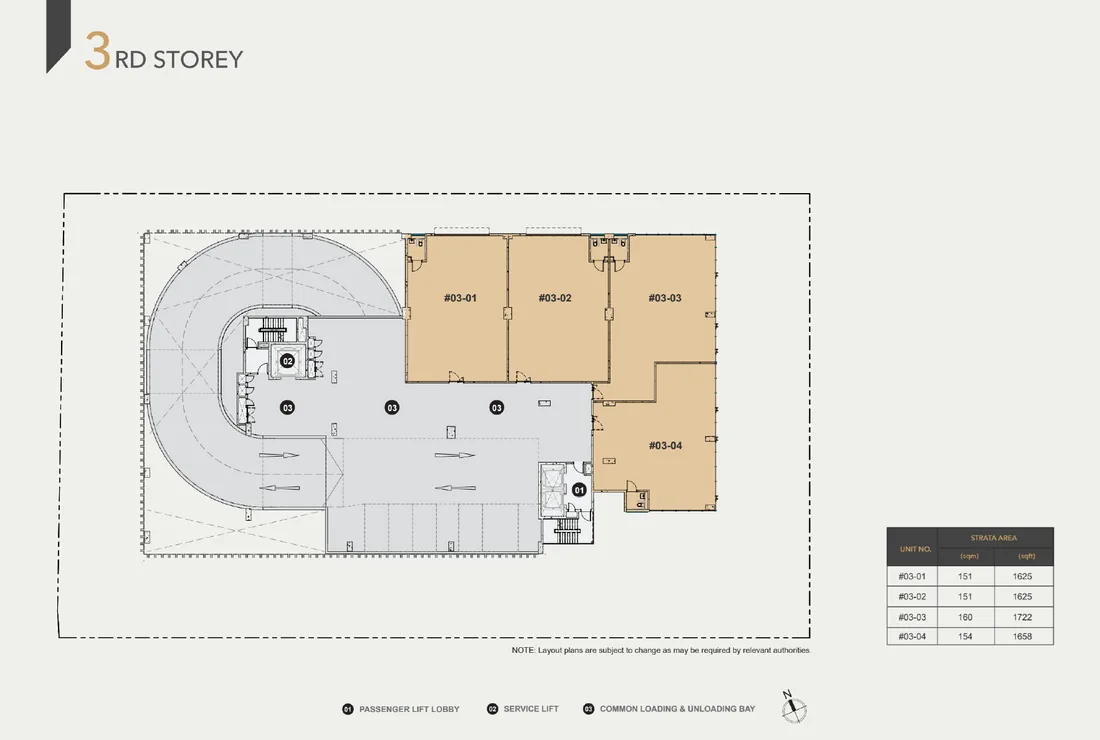
If you are looking at strata industrial units Singapore, the approval details become even more operational. URA’s use quantum rule for B1 strata units is explicit about the percentage of floor area/GFA used for industrial purposes. If your planned model depends on a large https://fongcheemengyuj.lumenforgex.com/posts/space-nova-floor-plans-explained-ramp-up-loading-unloading-access office footprint, showrooms, or service areas that are not industrial, you can easily drift into the non-industrial portion that is constrained by the allowable “remaining area” logic.
This can show up later when you try to expand or reconfigure. Some businesses begin with a small setup that fits. Later, they add more support functions and the non-industrial share grows. If the unit is B1 and the use quantum and allowed secondary uses do not support the change, the issue becomes harder to reverse.
That is why I recommend approaching the purchase like an operator, not like a spec-sheet reader. Decide first which parts of the workflow are genuinely industrial, which are ancillary, and which are secondary uses that require approval. Then map your layout to the unit’s approved use structure.
Matching your trade to approved use: focus on the details that trigger decisions
The cleanest way to reduce risk is to tie your intended trade to the same technical and use questions that decision-makers look at. JTC materials and unit pages commonly point to key technical checks such as floor loading, ceiling height, goods-lift access, loading-bay provision, and whether the trade matches the approved use.
These checks are not abstract. If your logistics depends on reliable loading, a unit without suitable loading-bay provision can turn into a daily frustration. If you need goods-lift access for throughput and you end up negotiating workarounds, your model’s economics change. If floor loading is not aligned, you may have to change equipment choices or limit how you stack and store items.
Even if you are not currently planning a heavy process, the “trade matches approved use” question is the anchor. Your business plan has to be defensible against how the unit is authorised to operate. A tenant who is good on rent can still be bad for compliance if their use sits outside what the unit is approved for, or if the industrial quantum and nuisance constraints do not align.
A short pre-purchase checklist that actually prevents problems
If you only remember one thing, remember this: before you pay a deposit, you want your trade fit to be clear enough that you can forecast compliance, not just revenue. Here is a focused checklist you can run with your agent, lawyer, and whoever handles your trade permitting and documentation:
- Confirm whether the unit is within B1 industrial property Singapore (or a different category) and understand the B1 use quantum requirement for industrial purposes
- Verify the unit’s trade fit, especially “clean/light” requirements and any nuisance buffer considerations relevant to the intended operations
- Check technical constraints that affect day-to-day logistics, including goods-lift access and loading-bay provision
- Review structural and build limits like floor loading and ceiling height against your equipment plan
- Align your layout with what counts as industrial versus ancillary/supporting space, so your operating model stays within approved use logic
This checklist is intentionally not about hype. It is about reducing the chance you buy a unit and then spend your next phase of growth fighting constraints you could have identified early.
Freehold vs leasehold industrial: tenure affects strategy more than people expect
Buy industrial property Singapore often comes down to tenure choices, and freehold vs leasehold industrial Singapore is where buyers’ motivations diverge sharply.
Context from JTC indicates that freehold industrial space is relatively scarce in Singapore, and much of the new industrial supply is on leasehold land. JTC’s estate and unit pages commonly show lease terms like 60-year, 30-year, or 20-year depending on the estate and product. That has a direct impact on how you treat the asset: an operating base for a decade versus an investment you plan to cycle.
Here is the trade-off that can surprise people. A leasehold unit might still be the right buy if your business needs the fit and the rental yield works in your holding period. But if your plan assumes you will “set up forever” and build a long-term fixed setup, lease expiry becomes a silent variable that can influence everything from your tenant selection to your exit timing.
Freehold, where available, tends to offer more long-range flexibility, but the scarcity means selection can be narrower. In practice, the right decision depends on whether your business model values flexibility more than it values the type of unit (B1 vs B2, flatted vs ramp-up, strata constraints, and so on).
Ramp-up vs flatted: your logistics is part of the trade fit
Even among industrial units that look similar, access design can change how well your operation functions. Context from JTC describes that ramp-up factories provide direct vehicular access to units for loading and unloading, while flatted factories are generally accessed via common corridors, lifts, and loading bays. That layout difference affects logistics efficiency, truck access, and fit-out flexibility.
So when you are buying industrial property Singapore, do not treat “ramp-up” as a luxury feature. If your trade requires frequent loading and unloading with specific truck behaviour, ramp-up access can remove bottlenecks. If you are doing lighter distribution with less frequent heavy moves, a flatted arrangement might still work, as long as goods-lift access and loading-bay provision align with your workflow.
This is another reason trade fit matters. Your approved use might technically match, but if your operational pattern is misaligned with access and loading, your business will “work Space Nova 21 New Industrial Road around” the unit. That can create operational strain, and in some cases, drive changes to processes that affect compliance.
Location matters, but only after use fit is locked
City-fringe industrial property Singapore precincts are often favoured for e-commerce, light manufacturing, R&D, and urban logistics because they are closer to workforce catchments and transport links. Context here includes examples like Tai Seng, Paya Lebar, Ubi, Kallang, and MacPherson, and it also notes that URA’s B1 planning maps show B1 industrial clusters around city-fringe MRT areas.
It is tempting to pick a place first. I would still encourage a sequence that starts with approved use. If you buy a city-fringe B1 industrial property Singapore unit that is great for location but weak on trade fit, you may find that tenants who suit the zoning and technical constraints are more limited than you assumed.
When location is aligned, you get the compounding effect. When location and approved use align, you can negotiate leasing with a clearer story and fewer compliance surprises. That is especially important for industrial property investment Singapore, where your rental strategy depends on the pool of tenants who can truly operate there within the authorised use logic.
Buying new, and paying GST, changes your upfront cash plan
If you are buying a new non-residential property from a GST-registered seller or developer, GST is payable on the purchase. IRAS indicates that buyers of non-residential properties must pay GST if the seller is GST-registered.
This matters because industrial property often looks like an “income play” where buyers focus on expected industrial property rental yield Singapore. But if your purchase price includes GST that you must fund upfront, your net yield calculation and cash flow timeline change immediately.
It also influences how aggressively you can pursue a ramp-up industrial units Singapore strategy, a new launch industrial property Singapore target, or a strata acquisition where you are paying for fit and convenience. If GST and other acquisition costs strain your cash buffer, you might not have the working capital to settle fit-out and compliance requirements in the early months.
Stamp duty and sellers’ stamp duty: plan for the transaction, not just the tenancy
Industrial property stamp duty Singapore planning can be simpler than residential because ABSD does not apply. Context from IRAS states that industrial property is not subject to Additional Buyer’s Stamp Duty; ABSD applies to residential property acquisitions. Industrial transactions are subject to normal BSD rules, and on disposal, seller’s stamp duty for industrial property may apply where applicable.
Seller’s stamp duty for industrial property is based on holding period under the rates provided by IRAS context: 15% if sold within 1 year, 10% within 1–2 years, 5% within 2–3 years, and none after 3 years. Even if you are planning to hold, these bands still matter when you evaluate whether you are buying for stability or for repositioning.
For freehold vs leasehold industrial Singapore strategies, holding period logic matters too. A leasehold unit might be targeted for a shorter cycle if the tenant mix is clear and your operational plan is time-bounded. A freehold asset can tempt longer holding, but liquidity and trade specificity still determine how quickly you can exit.
Industrial property loan and underwriting: your numbers must survive lender scrutiny
Industrial property loan Singapore discussions often get reduced to “can I get a loan?” In reality, lenders underwrite industrial assets with a different mindset than residential.
Context provided indicates that financing for property investment generally depends on lender assessment, and non-residential loans are typically under commercial terms rather than residential housing-loan rules. That means your rental model, business intent, and the operational fit to approved use can matter for how the risk is perceived.
I have seen buyers assume a “good location” will carry them through underwriting. Sometimes it does. Other times, the lender wants a clearer story that the property will attract tenants whose use is permitted and technically workable. That loops back to why your approved use match is not just a regulatory compliance task, it is also a financing quality-of-collateral question in commercial underwriting.
Buying under a company name: common, but do not assume it changes the use rules
Buyinging industrial property under company name is common for assets held for business or investment. IRAS stamp duty rules treat entities differently mainly in the context of residential ABSD purposes; industrial SSD rules can still apply on disposal regardless of buyer profile.
So if you are buying under a company structure, treat it as a tax and documentation consideration, not a compliance shield. The approved use constraints, B1 use quantum logic, and technical fit checks still stand. The unit does not become more permissible just because the registered owner is an entity.
If you are planning to lease it out, your tenant’s operating model still needs to sit within the approved use and the constraints that come with it. A company owner does not change the zoning intent.
New launch and ramp-up units: when “brand new” still needs a trade fit
New launch industrial property Singapore is attractive for obvious reasons: fresher building condition, potentially fewer immediate maintenance surprises, and sometimes better access logistics depending on design.
But remember, approvals and use quantum rules do not become irrelevant because the building is new. If the development is B1, URA’s use quantum applies to B1 developments and strata units, with at least 60% of floor area/GFA used for industrial purposes, and the remainder limited to ancillary/supporting uses and approved secondary uses. That requirement shapes how you fit out even a new space.
For buyers considering ramp-up industrial units Singapore, the newness helps with build condition and asset life, but access design still determines daily efficiency. A ramp-up factory can reduce loading bottlenecks, and that is operationally valuable for trades that rely on direct vehicular access. Still, you must ensure the intended use is authorised and the nuisance and buffer expectations are satisfied within the zoning framework.
Where buyers get tripped up: the “almost industrial” assumption
The most common failure mode I see is a buyer who thinks the whole space can be used as “support,” or that the industrial component can be symbolic. Under B1 guidance, the 60% industrial purposes requirement is explicit, and the remaining area is not a free-for-all. Even if your business is broadly related to industrial work, you still have to separate what counts as industrial purposes from what counts as ancillary/supporting space and approved secondary uses.
Another failure mode is assuming “case by case” means “likely.” URA’s language around B1 nuisance buffer requirements suggests that uses needing more than a 50 m nuisance buffer are generally not allowed, while some general industrial uses may be considered case by case if buffer requirements are met. Case by case assessment still requires evidence and alignment. You want to know early where your intended process sits.
Finally, buyers sometimes over-index on city-fringe convenience and under-index on technical constraints. Goods-lift access, loading-bay provision, ceiling height, and floor loading can either make your trade smooth or force costly workarounds. Since these items are referenced as key technical checks, they deserve real diligence before you commit capital.
Putting it together: a practical buying approach that respects the approved use
When I advise buyers, I try to collapse the decision into one principle: your intended trade has to match the unit’s approved use logic, not just the buyer narrative.
Start with the zoning and its control framework. If it is B1 industrial property Singapore or a strata unit within a B1 development, internalise the use quantum and nuisance buffer implications. Then check the technical realities: goods-lift access, loading-bay provision, ceiling height, and floor loading. If logistics requires ramp-up characteristics, evaluate ramp-up industrial units Singapore in that context, not as a standalone feature.
Only after the use and technical fit is clear should you optimise for investment or lifestyle factors like city-fringe industrial property areas such as Tai Seng industrial property or Paya Lebar industrial property. If your trade fit is correct, location can improve tenant attractiveness and reduce vacancy risk. If trade fit is wrong, location cannot fix it.
Then model your acquisition costs realistically. GST can apply for new non-residential purchases from GST-registered sellers, and industrial property stamp duty Singapore planning should account for normal BSD rules and potential seller’s stamp duty on disposal by holding period. For financing, assume commercial underwriting and build a defensible rental and operating plan that reflects permitted use.
Industrial property can be a strong asset class, but the strongest deals are rarely the most dramatic ones. They are the ones where your business plan, the approved use, the unit’s technical constraints, and the transaction cost structure all agree with each other.